Making Tax Digital (MTD) for Income Tax begins on 6 April 2026 and initially applies to self-employed individuals and landlords with qualifying income over £50,000.
All businesses, regardless of size, are required to report taxable benefits in kind and certain expenses provided to employees and directors. This is done annually through a P11D form submitted to HMRC.
Armstrong Watson is continuing to strengthen its Financial Planning Team in 2026 with the recruitment of four new Financial Planning Consultants across its offices. Joining the firm are Charlotte Fletcher and Glyn Jenkinson (specialising in protection advice) in Leeds, Murray Greig in Glasgow, and Fiona Durham in Carlisle.
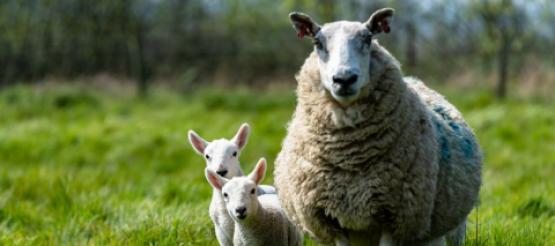
For farm businesses, it is difficult to predict what will happen in 2026 or beyond. The only certainty seems to be that commodity prices will continue to fluctuate wildly – the recent fall in milk prices being an unfortunate example. More extreme weather patterns are also likely to impact crop yields, selling prices and input prices, while gas, oil and fertiliser prices have risen as a result of escalating conflict in the Middle East.
The UK hotel sector continues to face intense financial pressure. Rising labour and energy costs, interest rate volatility and changing travel behaviours have left many hotel owners struggling to maintain profitability - even with healthy occupancy. And there are further headwinds on the horizon.
The 2026/2027 tax year represents a significant shift in the UK’s fiscal landscape. While several of these measures were announced in previous Budgets, April 2026 marks the point of implementation for reforms affecting business succession, digital compliance, and increasing costs for businesses.
Selling or transferring agricultural land and farms can have significant tax implications, particularly concerning Capital Gains Tax (CGT) and Inheritance Tax (IHT). Following increased CGT rates and major IHT reforms announced in the 2024 Autumn Budget, and a further amendment in the 2025 Autum Budget, it is important to consider the current rates and the implication of future increases.